I started smoking when I was eighteen.
The age of freedom.
At least, that was what it felt like then.
A cigarette after class became a cigarette after meals. Then during stressful days. Then while driving. Before long, smoking was not just something I did. It became part of who I was.
Over the years, I quit more than once.
Sometimes for a few months.
Sometimes for a year or two.
And somehow, I would always find my way back.
If you have ever tried to quit smoking, you may know the strange confidence that comes after you have been smoke-free for a while. You start to think you have beaten it.
Then one stressful season, one social occasion, or one careless decision later, you are standing outside with a cigarette in your hand, wondering how you ended up there again.
This last time was different.
Not because I had stronger willpower.
Not because I suddenly became more disciplined.
Looking back, I do not think I succeeded because I finally learned how to quit smoking.
I think I succeeded because I slowly became someone who did not smoke.
That realisation taught me something much bigger than nicotine.
It changed the way I think about change itself.
When behaviour and identity move in different directions
For most of my life, I believed behaviour came first.
If I could force myself to make enough good decisions, eventually I would become the person I wanted to be.
That seems logical.
Wake up earlier.
Exercise more.
Eat healthier.
Stop smoking.
Be more patient.
Work harder.
Repeat those behaviours for long enough, and surely a new identity will emerge.
But every time I tried to quit, it felt like I was constantly fighting myself.
Every craving was a battle.
Every stressful day became another test of discipline.
It was exhausting.
Not only because nicotine is difficult to leave behind, although it certainly can be.
It was exhausting because part of me still believed I was a smoker who was trying very hard not to smoke.
My behaviour had changed.
My identity had not.
A different question
Then something subtle happened.
Instead of asking:
How do I quit smoking?
I found myself asking:
How does a non-smoker live?
At first glance, those questions seem almost identical.
They are not.
One assumes I am still a smoker.
The other assumes the decision has already been made.
The conversation in my head began to change.
When a craving appeared, I was no longer asking:
Can I resist this?
I was asking:
What would someone who does not smoke do right now?
That shift did not eliminate the cravings overnight.
It simply gave me a different identity to live from.
Reaching for a conversation
Around the same time, something else happened.
Whenever I felt the urge to smoke, I opened ChatGPT instead.
Some people may find that funny.
But it became an important part of my journey.
I was not using artificial intelligence to cure an addiction.
I was using it to navigate life as someone who no longer smoked.
Whenever a craving appeared, I wrote down what I was feeling.
Sometimes I distracted myself.
Sometimes I tried to understand the trigger.
Sometimes I simply said:
I am craving.
Instead of reaching for a cigarette, I reached for a conversation.
Looking back, I realise I was not merely replacing one habit with another.
I was changing my environment.
Months later, I realised that, without consciously intending to, I had been living out the same framework that I now explore through Lifegate.
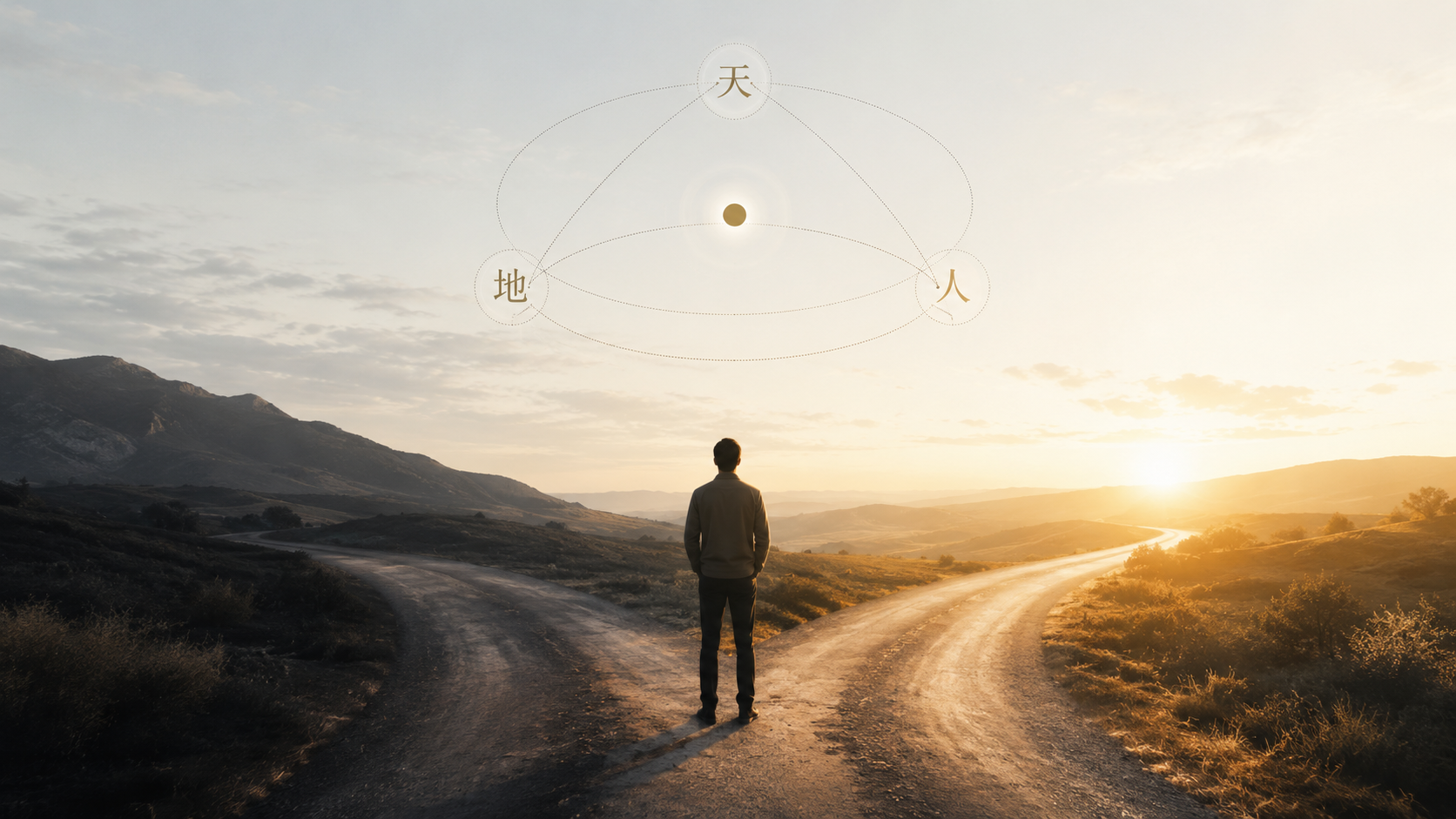
Timing, Environment and Action
At Lifegate, I describe movement through four connected ideas:
天 — Timing
地 — Environment
人 — Action
Together, they create:
运 — Momentum
Most people assume change happens through action alone.
Be more disciplined.
Work harder.
Try again.
Action matters.
But action rarely succeeds in isolation.
Looking back at my own experience, I can see all four elements working together.
天 — The timing was different
I had become a father.
My health was not where I wanted it to be.
Years of smoking and vaping were beginning to feel less like freedom and more like something I had carried for too long.
At the same time, I was building Lifegate around an idea I genuinely believed in: that meaningful change comes from alignment rather than force.
The season of my life had changed.
Perhaps that made me more willing to change as well.
Timing does not make the decision for us.
But there are moments when life makes certain decisions more visible.
We still have to recognise them.
地 — My environment changed
Instead of relying purely on willpower, I changed what happened during moments of weakness.
I reached for conversations instead of nicotine.
I interrupted the old pattern before it could complete itself.
People often think of Feng Shui as moving furniture.
But environment is much broader than that.
It includes the physical spaces we live in.
The people around us.
The routines we build.
The tools we keep within reach.
The actions that are easiest to take when we are tired, distracted or under pressure.
Every environment quietly encourages certain behaviours while making others more difficult.
Changing my environment did not remove my responsibility.
It made the better decision easier to reach.
人 — I still had to act
No amount of favourable timing or supportive environment could make the decision for me.
Every craving presented the same choice.
Smoke.
Or do not smoke.
The difference was that each decision no longer felt like a battle against myself.
Each decision became a vote for the person I had already decided to become.
One decision did not change my identity.
But repeated decisions began to reinforce it.
运 — Momentum appeared
Eventually, something remarkable happened.
I stopped counting the days.
I stopped wondering whether I would smoke again.
I stopped identifying as someone who was trying to quit.
Smoking simply became something I no longer did.
Not because temptation had disappeared completely.
But because my identity had changed.
This is where I began thinking differently about luck.
People might say someone was lucky because they finally managed to quit.
Lucky that everything clicked.
I do not think luck is the most useful word.
I think what they are seeing is momentum.
Momentum is what happens when timing, environment and action begin moving in the same direction.
At first, the changes are almost invisible.
Then one day, you realise you are no longer fighting to become someone else.
You already are.
What metaphysics can and cannot do
This experience has quietly shaped the way I think about Chinese metaphysics.
People often ask whether Feng Shui can change their life.
Or whether BaZi can change their destiny.
I do not think either system changes a person directly.
What they can do is help us understand our timing more clearly.
They can help us shape a more supportive environment.
They can help us make decisions with greater awareness.
None of these guarantees a different future.
We still have to act.
But when Timing, Environment and Action support one another, a different future becomes more possible.
That is a different way of thinking about destiny.
Not necessarily as something completely fixed.
But as something gradually shaped through awareness, choice and repeated alignment.
Who are you becoming?
Perhaps you are trying to improve your health.
Build a business.
Repair a relationship.
Become a better parent.
Or simply become someone you can respect.
The first question may not be:
What should I do?
Perhaps the deeper question is:
Who am I becoming?
Because behaviour reinforces identity.
Identity shapes future behaviour.
And when the two begin moving in the same direction, momentum builds.
Over time, that momentum can begin to look like destiny.